For cross-border sellers on Amazon US, when a SKU's return rate comes in above expectation, the real question is not whether the rate itself is high, but how much this return actually costs, and whether to fix the listing, switch on returnless refunds, or delist to stop the loss. The answer comes in three steps: first align the return rate with your own category threshold (only above the threshold do the platform's processing fee and frequent-returns badge kick in), then break the loss on one return into five amounts (refund administration fee, the fulfilment fee that is not refunded, the above-threshold processing fee, the unsellable purchase value, and the disposal fee), and finally use the break-even return rate to decide whether to fix the listing, enable returnless refunds, or delist. Every number in this article is an explicitly labelled hypothetical example, not a platform average or real store data.
1. The decision: when the return rate is high, fix the listing, offer returnless refunds, or delist
For cross-border sellers on Amazon US, when a SKU's return rate comes in above expectation, the real question is not whether the rate itself is high, but how much this return actually costs, and whether to fix the listing, switch on returnless refunds, or delist to stop the loss.
The key to that decision is separating the reasons for returns: selection returns caused by unclear sizing, specification or description can be cut by fixing the listing; a defective product sends you back to the supplier; damage in transit calls for better packaging; and bracketing (buying several of the same item and returning the rest) and fraudulent returns are controlled with policy or returnless refunds. The same return rate implies opposite actions depending on the reason, which is why this article covers return reasons before costing them.
2. Mechanism: the five amounts through which a return erodes profit
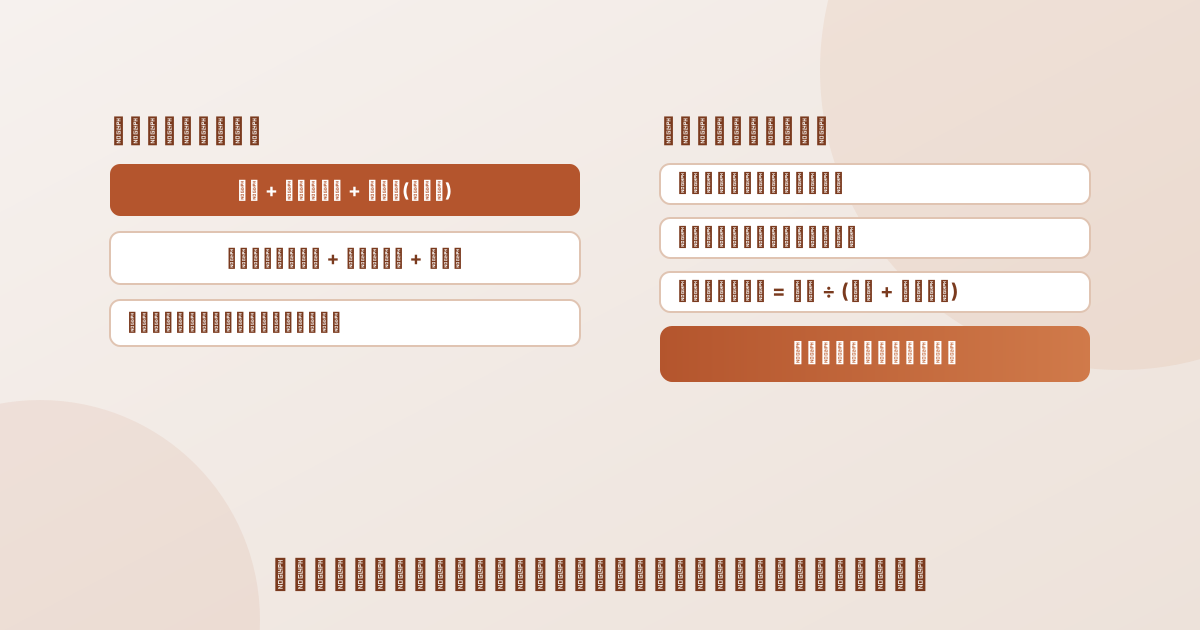
A return does not only cost the refund amount: the refund reverses the revenue, but the fulfilment fee is not returned, Amazon also keeps a refund administration fee, returns above the category threshold incur a returns processing fee, and an unsellable unit loses its purchase value plus a disposal fee.
Of these five amounts, the refund is the most visible line, but seller reports often show only the refund while the other four sit scattered across settlement periods as fees, so the true cost of a return is understated by more than half. The third-party tool sellerboard gives a concrete example in its return-cost breakdown: a USD 29.99 large standard-size unit above threshold carries about USD 10.52 of extra cost per sellable return (excluding the refund itself), made up of a USD 5.61 fulfilment fee, a USD 0.90 refund administration fee and a USD 4.01 returns processing fee; if the unit is unsellable, add the purchase value and a disposal fee.
3. Align the definitions first: return rate, refund and return cost are not the same thing
If these three definitions are not aligned first — how the return rate is calculated, whether refunds are counted again as a cost, and which returns incur the processing fee — every later calculation will be wrong. The table below sets out the metrics and definitions used in this article.
| Metric | Definition | Use in this article |
|---|---|---|
| Return rate | Units returned ÷ units sold in the same period, attributed to the original sales month; can be measured in units or in value | Deciding whether the category threshold is exceeded and whether the returns processing fee and frequent-returns badge are triggered |
| Refund | Revenue returned to the buyer per order, already deducted from net sales | Not counted again in the cost of returns, to avoid double-counting the refund and the purchase value |
| Refund administration fee | The portion of the original commission Amazon keeps (as relayed: no more than USD 5 or 20% of the commission) | One of the fixed loss items on a return |
| Returns processing fee | Charged per unit on the portion above the category return-rate threshold, by size and weight; apparel and footwear have no threshold and every unit is charged | Judging whether the platform is penalising high returns |
| Extra cost of a return | Refund administration fee + fulfilment fee + returns processing fee + (if unsellable) purchase value + disposal fee | The denominator of the break-even return rate |
The returns processing fee works like this: every non-apparel category has a return-rate threshold (in the 2026 rate card as relayed by the third party, from 2.9% for grocery to 12.8% for luggage), and only returns above the threshold are charged per unit; apparel and footwear have no threshold and every returned unit is charged, but on a lower rate card. So the same 6% return rate costs nothing in Home and Kitchen (threshold 8.1%) but is charged on the excess in Grocery (threshold 2.9%).
4. Evidence boundary: what these numbers can and cannot tell you
NRF's 15.8% and 19.3% are self-reported estimates from large US retailers (annual revenue above USD 500 million), not measured return rates from Amazon or any cross-border platform, and cannot be taken directly as your category target.
What can be verified word for word is the return rate, sample and survey method in the NRF press release, and the returns policy, returnless refunds, restocking fee and scan-and-refund in Amazon's official blog; what cannot be derived is your own category's real return rate, the returns processing fee threshold and tiers that apply to your account's category, and how much of a return is repairable selection behaviour. In addition, the specific figures for the returns processing fee and refund administration fee come from Amazon's 2026 rate card as relayed by the third party sellerboard, not directly from an official Amazon public page, so the fee preview in Seller Central governs in practice.
5. Reproducible analysis: return cost and stop-loss line in two scenarios
Both scenarios below are explicitly labelled hypothetical examples, used to demonstrate the method rather than to give conclusions. The core formula is break-even return rate = unit contribution ÷ (unit contribution + weighted extra cost per return), where unit contribution = selling price - commission - fulfilment fee - purchase value, and weighted extra cost per return = sellable share × extra cost of a sellable return + unsellable share × extra cost of an unsellable return.
Scenario A: low-price home small item, 10% return rate already above threshold (hypothetical example)
Hypothetical example: Home and Kitchen category (threshold 8.1%), selling price USD 9.99, commission 15% (USD 1.50), purchase value USD 1.80, FBA fulfilment fee USD 3.86, returns processing fee USD 1.84, refund administration fee USD 0.30, return rate 10%, unsellable share 40%.
Calculation: extra cost of a sellable return = 0.30 + 3.86 + 1.84 = USD 6.00; extra cost of an unsellable return = 6.00 + 1.80 + 0.50 (assumed disposal fee) = USD 8.30. Unit contribution = 9.99 - 1.50 - 3.86 - 1.80 = USD 2.83; weighted extra cost per return = 0.6 × 6.00 + 0.4 × 8.30 = USD 6.92; break-even return rate = 2.83 ÷ (2.83 + 6.92) = 29.0%.
Result: unit contribution USD 2.83, weighted extra cost per return USD 6.92, break-even return rate 29.0%; for every 100 units sold, USD 69.2 of extra return cost eats 27.2% of the contribution retained on kept orders.
Decision: the processing fee and unsellable risk together come to USD 2.76, above the USD 1.80 purchase value, so returnless refunds are preferable for small items under USD 9.99, with a price cap to control abuse. Returnless refunds save the returns processing fee, reverse logistics and the unsellable risk, at the extra loss of only the purchase value; when the processing fee plus unsellable risk exceeds the purchase value, returnless refunds are the better deal. Amazon's official guidance says returnless refunds suit low-price items (where return shipping may exceed the value) and can be scoped with a maximum item price (a USD 1 to 75 range).
Scenario B: high-price electronics accessory, 11% return rate close to threshold (hypothetical example)
Hypothetical example: Consumer Electronics category (threshold 11.2%), selling price USD 39.99, commission 15% (USD 6.00), purchase value USD 12.00, FBA fulfilment fee USD 5.61, refund administration fee USD 1.20, return rate 11% (below threshold), unsellable share 25%.
Calculation: with the threshold not exceeded no returns processing fee applies, so the extra cost of a sellable return = 1.20 + 5.61 = USD 6.81; extra cost of an unsellable return = 6.81 + 12.00 + 2.27 (assumed disposal fee) = USD 21.08; weighted extra cost per return = 0.75 × 6.81 + 0.25 × 21.08 = USD 10.38. Unit contribution = 39.99 - 6.00 - 5.61 - 12.00 = USD 16.38; break-even return rate = 16.38 ÷ (16.38 + 10.38) = 61.2%.
Result: with the threshold not exceeded, weighted extra cost per return USD 10.38, unit contribution USD 16.38, break-even return rate 61.2%; if the return rate rises to 13%, the above-threshold portion adds about USD 7.22 of processing fees per 100 units.
Decision: when the return rate approaches 80% of the threshold (about 9%), fix sizing, compatibility and the description first, so that crossing the threshold does not trigger the processing fee and the frequent-returns badge that weighs on conversion, rather than reacting after it has happened. The break-even return rate for high-price electronics is as high as 61.2%, which shows the processing fee is not the main threat; what really hurts is the frequent-returns badge that may appear once the threshold is crossed — it directly suppresses conversion and is then amplified by a ranking decline, a loss usually far larger than the processing fee.
6. Counter-examples and alternative readings: a high return rate does not always mean a bad product
One scenario that overturns 'high return rate equals bad product': selection returns caused by unclear sizing, specification or description, where the product itself is fine and fixing the listing pays better than delisting.
Another alternative reading is that a high return rate may come from bracketing (buying several of the same item and returning the rest) or from abuse of returnless refunds, rather than a product defect. How to tell? Look at the distribution of return reasons: if it clusters on wrong size and not as described, it points at the listing; if it clusters on defective or damaged, it points at the supplier or the packaging; if the same buyer repeatedly returns different orders, it points at abuse. Deciding actions from the return reasons rather than the total return rate is what stops a repairable selection return from being mistaken for a quality problem and delisted.
7. Action plan: what to collect, what to use as a baseline, when to stop
First build a per-SKU return log attributed to the order month, keeping the number of returned units, return reason, refund amount, refund administration fee, fulfilment fee, returns processing fee, whether the unit is sellable, purchase value and disposal fee.
- Fields to collect: SKU, order month, return month, return reason, refund amount, refund administration fee, fulfilment fee, returns processing fee, whether sellable, purchase value, disposal fee, whether returnless refund.
- Compute a baseline: use the last 30 days of orders to compute each SKU's return rate (attributed to the original sales month) and unit contribution, compare with the category threshold, and compute the break-even return rate.
- Observation window: align the return rate to the platform definition on a rolling 3-month basis; for low-price items watch whether returnless refunds are worth enabling, and for SKUs near the threshold watch whether the listing needs fixing.
- Stop conditions: when a SKU's return rate exceeds the break-even return rate and the return reasons point to an unfixable product defect, delist it or change supplier; when the processing fee plus unsellable risk is below the purchase value, do not enable returnless refunds.
- Fill in data: once you have the real rate card, returns processing fee tiers and return-reason reports in Seller Central, replace this article's assumptions and recalculate.
Frequently asked: are the return rate and the refund rate the same thing? No — the return rate counts units, the refund rate counts order value, and a returnless refund involves a refund with no return, so the two are defined differently. Do returnless refunds lower the return rate? According to the third-party account, returnless refunds still count toward the platform's return rate; what they save is the processing fee and reverse logistics, not the return rate itself. If the break-even return rate comes out very high, can returns be ignored? No — it only says the finances can still absorb them; the frequent-returns badge triggered above threshold suppresses conversion and is a separate metric that must be watched on its own.
8. Limitations and uncertainty
Three unknowns are most likely to change the conclusion: first, the real return-rate threshold and processing-fee tiers for the category that applies to your account; second, how much of the returns are repairable selection returns; third, how much abuse extra returnless refunds bring.
What evidence would update the judgement: if you can obtain your own SKU's return-reason distribution, real return rate and processing-fee tiers from Seller Central, the two scenarios turn from hypothetical examples into real stop-loss lines; if you can measure the change in abuse rate before and after enabling returnless refunds, you can judge how low to set the price cap. This article discusses a general method under Amazon US's public returns policy and NRF's US retail figures, and does not imply that Nuozhou Digital Intelligence provides real-time return data, back-end data or sales coverage for any platform.
Method and notes
Data basis for this article: the return rates of 15.8% (total retail) and 19.3% (online) are taken from the NRF and Happy Returns press release for the 2025 Retail Returns Landscape (2025-10-15; sample of 2,006 consumers and 358 US retailers with annual revenue above USD 500 million), accessed 2026-11-19; the returns policy, returnless refunds, restocking fee and scan-and-refund are taken from Amazon's official seller blog posts How to manage Amazon customer returns for seller-fulfilled orders (2025-04-15) and Amazon expands options for sellers to handle customer returns (2024-08-13); the FBA returns processing fee (category thresholds 2.9%–12.8%, no threshold for apparel and footwear, the rate card) and the refund administration fee (no more than USD 5 or 20% of the commission), the non-refund of fulfilment fees and the frequent-returns badge are taken from the third-party sellerboard article What an Amazon Return Actually Costs You (2026-08-25, described there as a relay of Amazon's 2026 rate card, verified 2026-08), with Seller Central governing the specific tiers. All selling prices, commissions, purchase values, fulfilment fees, returns processing fees, disposal fees and return rates in the scenarios are explicitly labelled hypothetical examples, not statistics from any platform or store.
The increment here is to translate the return rate into erosion of unit contribution, turn 'too many returns' into an executable stop-loss line via the break-even return rate, and separate the two decisions of enabling returnless refunds for low-price small items and preventing the above-threshold badge for high-price electronics.
To put the loss from returns into a full profit account, see Cross-Border E-Commerce Profit Calculation: The Five-Step Subtraction from GMV to Net Profit; for how return sensitivity interacts with the advertising ceiling, see Coupang Data Analysis; for the inventory and replenishment adjustments caused by returns, see Inventory Turnover and Replenishment Decisions; for advertising break-even and the real return on ad spend after returns, see ROAS and Break-Even ACOS.
This article was assembled with the help of an automated research workflow and is based on the public sources listed at the end; it has not been manually reviewed.
References
- 1. National Retail Federation & Happy Returns, Consumers Expected to Return Nearly $850 Billion in Merchandise in 2025 (primary source: the 2025 return rate of 15.8%, online 19.3%, 9% fraud, sample and survey method): read the original, accessed 2026-11-19
- 2. Amazon, How to manage Amazon customer returns for seller-fulfilled orders (primary source: 30-day returns, prepaid labels, returnless refunds, restocking fee, scan-and-refund, return reasons): read the original, accessed 2026-11-19
- 3. Amazon, Amazon expands options for sellers to handle customer returns (primary source: FBA returnless refunds, Grade and Resell, return-reason analytics, product support avoiding 11 million returns): read the original, accessed 2026-11-19
- 4. sellerboard, What an Amazon Return Actually Costs You (third-party tool source, relaying Amazon's 2026 rate card: category thresholds, returns processing fee rates, refund administration fee, non-refund of fulfilment fees, frequent-returns badge): read the original, accessed 2026-11-19