Coupang analytics: use Korean market prices, specifications and fulfillment costs for product selection
Use Coupang site, category, brand, store and product data to judge demand, price bands and competitive structure.
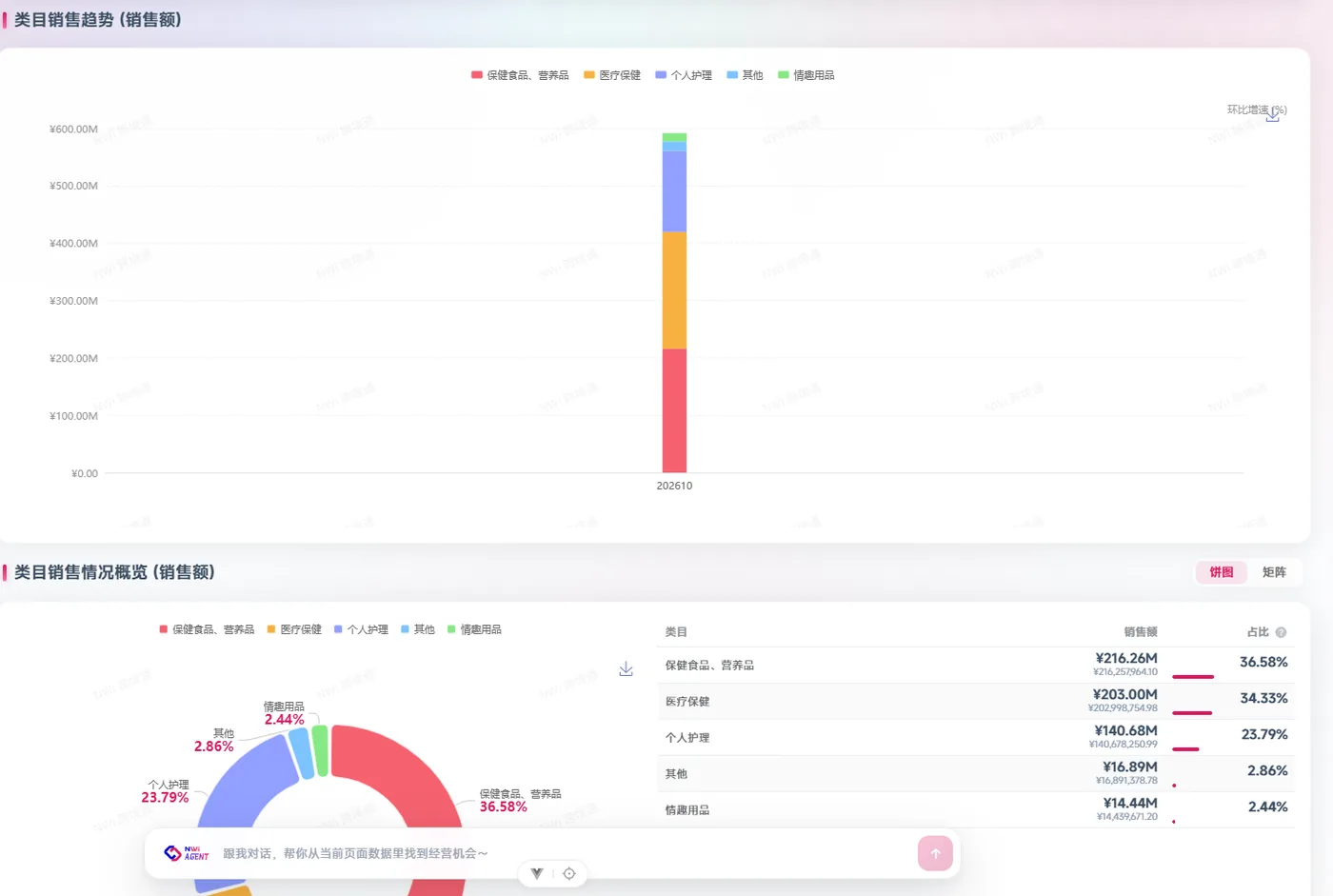
The short answer: Coupang analytics has to look at Korean-language product attributes, price, specifications, fulfillment and return costs. NWi CrossborderGo observes Coupang's sales structure by category, brand, store and product, helping teams judge whether the Korean market is worth entering and which specifications fit local demand better.
Questions you can answer with it
Which specifications/packaging do Korean consumers prefer?
Break it down with category, brand, store, product and price band data, and bring the conclusion back to one consistent methodology.
How high is Coupang's leading-brand concentration?
Break it down with category, brand, store, product and price band data, and bring the conclusion back to one consistent methodology.
How do you balance price band and fulfillment cost?
Break it down with category, brand, store, product and price band data, and bring the conclusion back to one consistent methodology.
Which categories have high return rates?
Break it down with category, brand, store, product and price band data, and bring the conclusion back to one consistent methodology.
Korea site vs. Japan site: how do you choose?
Break it down with category, brand, store, product and price band data, and bring the conclusion back to one consistent methodology.
Three common workflows
Market entry
Look at category scale, growth and brand concentration first, then judge whether the Korean market is "large demand but a solid top" or "fragmented demand with room for new brands".
Specifications/price bands
Cross Korean-language attributes (specifications, packaging, bundles, certifications) with price bands to find the combinations local consumers are actually willing to pay for.
Fulfillment modeling
Put cross-border logistics, local Korean fulfillment, returns and marketplace fees into a unit contribution model, to avoid looking only at the selling price.
Metrics and methodology
| Metric | Definition |
|---|---|
| Sales/units/average price | Market-side estimated metrics, aggregated by category and product. |
| Brand concentration | The share of category sales held by leading brands. |
| Specification distribution | Break down products and sales by attributes such as volume, count and packaging. |
| Price band | The distribution of units and sales after segmenting by average selling price. |
| Return cost | Return rate × per-unit reverse logistics/loss; requires first-party or service provider data. |
Coverage
Korea · subject to the actual activation scope of the product
Platforms, sites, historical periods and fields are subject to the coverage matrix confirmed in the contract.
Limits and boundaries
- Korean-language product attributes need cleaning and classification and cannot be mapped directly onto Chinese categories.
- Market data is estimated; platform back-end, fulfillment and return data must be integrated separately.
- Coupang's categories and historical depth depend on the activated modules.
- Certification, labeling and compliance requirements in the Korean market are outside the scope of the data product and must be confirmed separately.
Related pages
Platform analytics overview
Continue to the next page on this topic.
Open page →Market entry assessment
Continue to the next page on this topic.
Open page →Cross-border e-commerce product selection workflow
Continue to the next page on this topic.
Open page →Pricing and modules
Continue to the next page on this topic.
Open page →Coupang analytics FAQs
Can Coupang analytics show Korean-language product attributes?
You can observe Korean titles, specifications, packaging and other attributes by category and product; the scope of attribute cleaning and classification depends on the modules you activate.
What should I look at first in the Korean market?
Look at category scale, brand concentration and price bands first, then specification/packaging preferences and fulfillment costs. Looking only at the selling price easily overlooks local Korean logistics and return costs.
Can I calculate Coupang unit profit?
You can use market data to estimate prices and fees, then combine your procurement, logistics, returns and marketplace statements into a unit contribution model; market data itself cannot replace cost accounting.
How do I choose between Coupang and the Japan site?
Compare category scale, competitive concentration, fulfillment costs and compliance thresholds. The Korea site suits testing Korean-language attributes and local fulfillment; the Japan site depends more on Japanese-language content and long-term brand investment.
Is it suitable if I only work on the Korean market?
It suits teams that need to focus on the Korean market. If you also work on multiple Northeast Asian marketplaces, we recommend comparing with a multi-platform methodology rather than looking at a single market.
Want to see real Coupang data?
Bring your category and target site, and we will walk you through it once.
E-commerce data, methods and reports
Explore NWi EC Data product pages, platform coverage, data definitions and published research. Each source states its scope, definitions and limits.